greenDao 源码分析
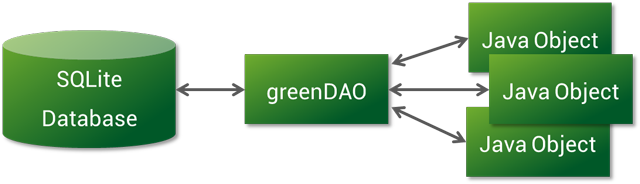
一. 核心类
1. DaoMaster
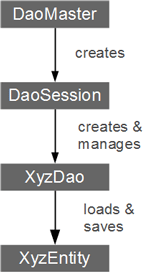
DaoMaster是使用greenDao的入口。
DaoMaster持有数据库对象,并且管理特定表的Dao类(而非对象)。
它具有创建表或者删除表的静态方法。
其内部类 OpenHelper 和 DevOpenHelper 是 SQLiteOpenHelper 的实现,
可在 SQLite 数据库中创建表 。
2. DaoSession
DaoSession 管理特定表的所有可用DAO对象,这些对象可以通过相应的get方法获取。
DaoSession 还为实体提供了一些通用的方法,例如插入、加载、更新、刷新和删除。
DaoSession 还可以管理缓存。
3. XXXDao
XXXDao 是数据访问对象,可以持久化和查询实体。
对于每一个实体,greeDao 会自动生成一个 DAO。
它比 DaoSession 具有更多的持久化方法,例如count, loadAll, insertInTx。
4. Entities
实体,即持久化的对象。通常,实体是使用标准 Java属性(例如 POJO 或 JavaBean )表示数据库行的对象。
注意:只支持 Java class,如果你使用 Kotlin ,实体类仍然要使用 Java class 。
Entity注解里可配置的属性
@Entity(
// If you have more than one schema, you can tell greenDAO
// to which schema an entity belongs (pick any string as a name).
schema = "myschema",
1 | // Flag to make an entity "active": Active entities have update, |
5. 图示以上几个类的关系
二. 源码分析
1. 结构图
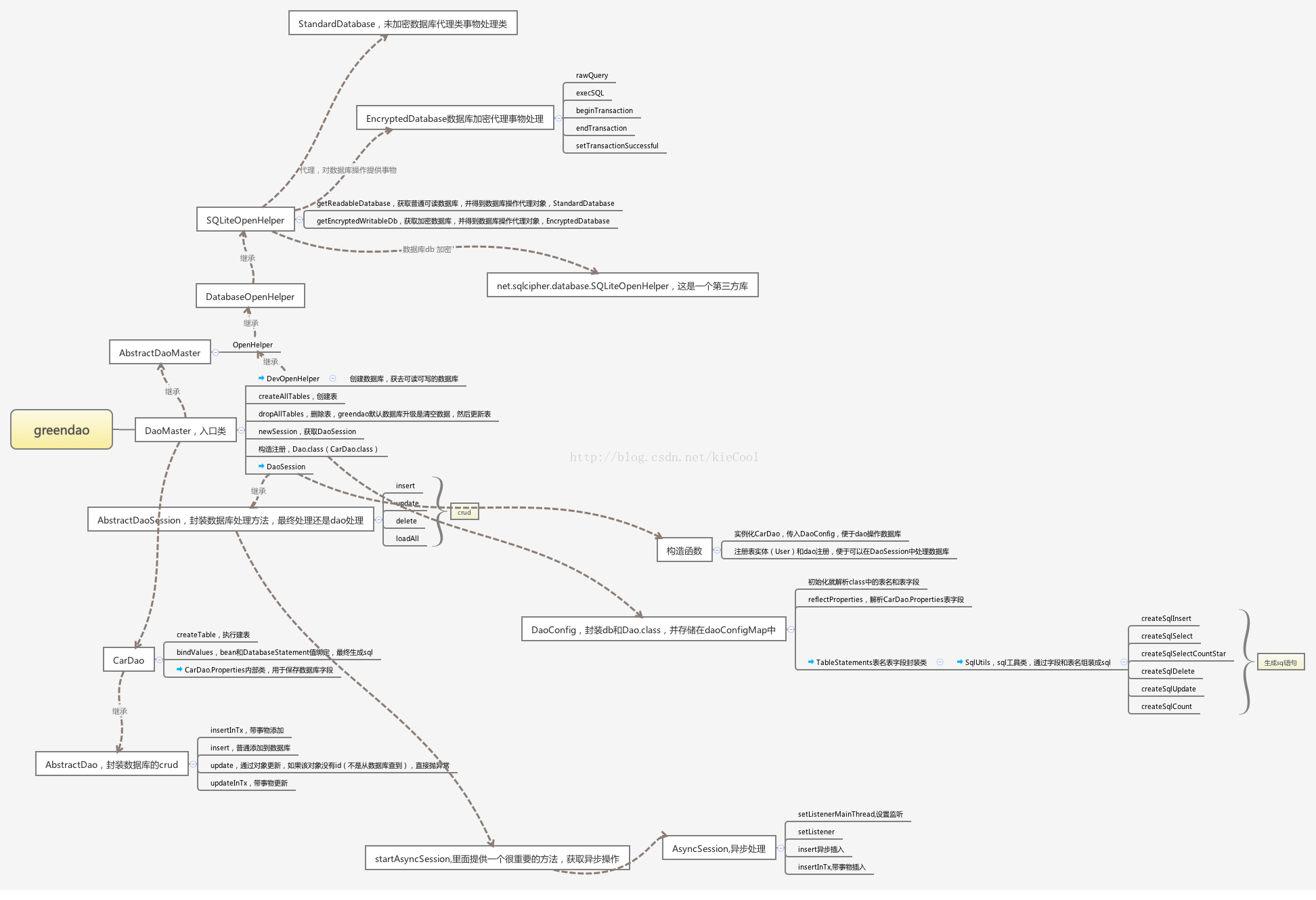
图片来源于:https://blog.csdn.net/kieCool/article/details/73930813
2. 参考:
- 官网
- 嘎啦果安卓兽:GreenDAO源码整体流程梳理
- 上面的时序图可配合这个文章查看:https://juejin.im/post/5d3a9193e51d4510a37bacd8
- jsonchao
三. 需要注意的几个点
1. 数据库更新:
为简单起见,使用由生成的DaoMaster类提供的帮助器类DevOpenHelper创建数据库。 它是DaoMaster中OpenHelper类的实现,它为您完成了所有数据库的设置。 无需编写“ CREATE TABLE”语句。
但是,DevOpenHelper在数据库更新时会删除所有表(在onUpgrade()中)。 因此,建议您创建并使用DaoMaster.OpenHelper的子类。
然后,Activities and fragments 可以调用getDaoSession()来访问所有实体DAO。
GreenDaoUpgradeHelper 是一个greenDao的数据库升级帮助类。使用它可以很容易解决数据库升级问题,只需一行代码。原始代码来自stackoverflow。
2. 主键限制:
实体类必须有一个long/Long类型的主键。对于这种情况,可将你的关键属性定义为附加属性,但是要为其创建唯一索引。
1 |
|
3. 多对多
对于多对多的实体,因为第一次获取的时候会缓存,所以再次获取的不是新数据,如果更新了数据,需要手动更新获取的数据,防止使用缓存。
或者先清除缓存,再获取数据。
1
2
3
// clear any cached list of related orders
customer.resetOrders();
List<Order> orders = customer.getOrders();
4. Convert annotation and property converter
- 注意:如果在实体类中定义自定义Type或者converter,要使用static修饰他们。